The Inn at the Crossroads
  • Home
  • About
    • FAQ
    • From Readers
    • About the Author
    • Interviews and Articles
  • Latest Posts
  • Game of Thrones
    • Game of Thrones Recipes, by region
    • Game of Thrones Recipes, by meal
    • The Official Game of Thrones Cookbook
  • Cookbooks!
    • The Official Game of Thrones Cookbook
    • World of Warcraft Cookbook
    • Hearthstone Cookbook
    • Elder Scrolls Cookbook
    • Firefly Cookbook
    • Overwatch Cookbook
    • Star Wars: Galaxy’s Edge Cookbook
    • WoW: New Flavors of Azeroth
    • Star Trek Cookbook
    • Second Game of Thrones Cookbook: Recipes from King’s Landing to the Dothraki Sea
      • Game of Thrones Cookbooks Bibliography
    • Errata
  • Other Recipes
    • Other Fictional Foods
    • Other Historical Foods
    • Everything Else!
  • Contact
    • Sign Up for News!

Author Archives: Chelsea M-C

Fried Squash

If you have a garden, and like me, thought back in the spring that a single little squash plant would be a great thing to plant, then you are also probably finding yourself swamped with more of the little things than you can cook. I’m pulling out about 1-2 per day at this point, and they’re piling up. It’s almost enough to drive me to that age-old trick of slipping them into open windows at the coop parking lot…

Thankfully, Bartolomeo Scappi is here to (literally) spice up our squash:

fried squash

This 1570 recipe is fairly simple: fry the squash and season with spices. But the resulting concoction is one of the most flavorful presentations of squash I’ve found yet. I’m not a big fan of fennel, or anything especially anise-like, but fennel pollen has been a revelation. It’s a popular ingredient in Scappi, so I decided after the last paycheck to splurge and get some.

I say splurge because the stuff is pricey, but so little of it packs a big amount of flavor that I think it’s probably worth it in the end. Combine it with a little garlic, salt, and vinegar, and you’re in serious business. The squash softens as it cooks, while the almost tempura thin coating on the outside crisps up. I put no more spice on than you see in the photo above, yet the flavors were definitely present. After just one batch, I knew this was a keeper. Give it a go, and tell me what you think!

Scappi’s Fried Squash Recipe

Cook’s/Gardener’s Notes: it turns out that harvesting one’s own fennel pollen isn’t that hard; I’ll be planting some next year for sure. You can also harvest dill pollen, another mega flavor powerhouse!

Ingredients:

  • 2 Tbs. salt, plus another pinch for sprinkling
  • 1 yellow squash
  • 1 cup rice flour
  • ~1 cup olive oil, for frying
  • pinch of fennel pollen
  • pinch of garlic powder

Slice the squash into discs about 1/4″ thick. Put these in a large bowl and salt liberally, tossing around to salt both sides of the slices- this will draw out excess moisture from the veggies. After about 15 minutes, press any remaining liquid from the squash. Toss the slices in rice flour until coated. Pour the olive oil into a shallow saucepan and bring up to medium heat. Gently lower the floured squash slices into the hot oil. Let each side fry for around 3-5 minutes, or until a light golden color. Remove to a plate lined with paper towels to drain.

The Chelsea Physic Garden

So, I was in London last week for a friend’s wedding, and remembered a well-timed email from a month or so earlier, suggesting I check out the Chelsea Physic Garden, if I ever had the chance. I don’t recall which of you sent the note, but Thank You!

The original walled garden was created in the 1600s as a training aid for apothecaries. I could have easily lost an entire day or more there, just wandering from section to section, reading and learning about what amazing plants they held. The only bad part?

I didn’t bring a camera. *facepalm*

If there were a single place from this whole trip for which a camera would have been amazing, it was here. Thankfully, I have been able to purloin a few from the web.

The gardens themselves are amazing. Many hold plants that are clustered by purpose: there is a section of fiber plants- hemp, cotton, bamboo, flax, etc; a section of perfumery plants, and of course, one of my favorites: the brewing plants. Bog myrtle, yarrow, and other plants, plus a woven skep behive, for mead-making. There I learned, much to my delight, that sweet woodruff is used in Germany to make May Wine- I’ve got loads in my front garden. You know that’s going on the list.

The garden of medicinal plants was redone just last year, and already looks fantastic. The centerpiece of that section is a giant serpent and staff woven out of grapevines, a nod to Asclepius, the Greek god of medicine and healing.

In that redone garden, the medicinal plants are grouped in several ways. Some are by continent, a fascinating yet brief look at medicinal plant culture from around the world.

DSC_0513

This visit was an inspiration for my gardens at home. Many of you have been following my progress with the first herb garden via the Inn’s Facebook page, but I have such grand plans after this trip. Eventually, I hope to have dedicated brewing, kitchen, and medicinal gardens. Of course, some of that is prone to overlap, but plants seem to be doing so outrageously well in the dirt here at the new house that I just want to plant everything.

But one seedling at a time… :)

Elderflower Fritters

Elderflower Fritters

Thoughts:

Elderflowers are one of those fantastic yet often overlooked ingredient. They are far less popular in America than in Britain, where they the flowers are used culinarily and to make cordials, while the berries are incorporated into a wild array of recipes. The fritters seem to fit very well with the Reach, and Highgarden, where they have such bumper crops of fruits that they wouldn’t need to worry about nipping the berry crop in the bud.

I’m lucky enough this year to have my own elderflower bush, so of course I knew I would have to make something from it. I’ve battled a variety of insects throughout the spring to safeguard my crop, and the blossoms are right at their peak. I recalled a recipe I’d seen in the Opera of Bartolomeo Scappi, one of my favorite historical cookbooks, for elderflower fritters. Done, and done.

The modern versions are aesthetically much prettier, in part because they keep their original shape, which is pretty photogenic. The batter is a variation on the one I used for the Apple Crisps, making a fritter that is light and crispy. The flavor is just slightly floral, and not unpleasant, even to one who doesn’t usually like floral-flavored things *guiltily raises hand*, while the sugar on top gives it a great little crunch.

The medieval version, I’m sorry to say, was a total flop. Granted, I tried to make them for the first time in a terrible hurry the day before leaving home for an overseas wedding, so the deck was somewhat stacked against them. But I’d been keen to try them since first reading the recipe. That recipe instructs one to scoop balls of the mixture into hot butter or lard, which leads to the first two problems: 1. the batter was far from scoopable, and 2. butter burns pretty easily, even when clarified. By the end, I didn’t have a single medieval fritter that was edible, but I could sense the hint of what they should have been. I’ll give it another try next year, or perhaps with dried elderflowers in the off-season.

Elderflowers

Modern Elderflower Fritters

Cook’s Note: Bonus Points if you can get a hold of an elderflower cider, such as Angry Orchard makes! Also, try using smaller clusters of flowers for easier frying and eating.

Ingredients:

  • 1/2 bottle sparkling hard cider (6 fl. oz)
  • pinch of dry yeast
  • pinch of salt
  • zest of 1/2 lemon or orange
  • 1 cup flour
  • 6 elderflower blossom clusters, or more, as desired
  • oil for frying (I used canola)
  • sugar, for sprinkling

Mix together all ingredients except the elderflowers and oil, tweaking as necessary, until you have a nice runny batter. Bring the oil up to a nice medium heat. Gently dip a cluster of elderflowers into the batter, holding the stem upright. You can wiggle it around until all the blossoms are covered. Let any excess batter drip off, then carefully lower the battered flower into the hot oil. You should be able to cook each fritter almost entirely on this side, although you may find flipping it to finish the top side is helpful. When the fritters are golden brown, remove to a plate lined with paper towels to drain. Sprinkle with some sugar, and enjoy!

Medieval Elderflower Fritters

Cook’s Notes: This recipe was a flop for me. I’ve included the list of ingredients in case you’d like to give it a go yourself! The instructions can be found on Google Books… I’d love to hear how yours turns out!

Ingredients:

  • 1 lb. creamy cheese
  • 1 lb. ricotta
  • 3 oz. breadcrumbs
  • 4 oz. sugar
  • 6 eggs
  • 3 oz. elderflower, soaked in milk
  • flour


Elderflowers, close up

Leg of Lamb

“By the time the telling was done, it was dark outside and Sam was licking his fingers. ‘That was good, but now I’d like a leg of lamb. A whole leg, just for me, sauced with mint and honey and cloves. Did you see any lambs?’” -A Clash of Kings

DSC06016

Thoughts:

This was one meal that really invoked the spirit of the North. Because Sam is the one dreaming about this dish, I could definitely see it being served during a time when the Night’s Watch wasn’t struggling quite so much as they are when we last see them. After all, Jon and Sam’s feast after taking their vows involved rack of lamb and berries with sweet cream.

But this really put me in mind of Winterfell- long trestle tables groaning with heavy platters, heaped with meat and sauce. The smell of roasting meat on spits wafting from those huge blazing hearths. The clink of knives on plates, and the glug of ale and mead being poured into mugs.

YES.

This recipe was delicious. I loved the sauce, but didn’t think there was nearly enough of it. I served this at Easter dinner, and the meat-to-sauce ratio was definitely skewed. I’d suggest doubling it if you are working with a hefty portion of lamb. The meat itself came out perfectly, tender and just pink. It was tasty on its own from being basted with the drippings, but paired with the sauce it was wildly better. I can’t wait for another special occasion to break this out again!

Recipe for Leg of Lamb, in dark beer, honey, and spices

Ingredients:

  • 1 leg of lamb, bone in (mine was a monster 7 pounder for Easter dinner)
  • 2 cups dark beer, such as stout or porter
  • 1 cup honey, divided in half
  • 1 Tbs. juniper berries, crushed
  • 3 bay leaves
  • 2 tsp. whole cloves
  • mint?

Preheat the oven to 375F. Combine the beer, honey, juniper, bay leaves, and cloves in the bottom of a deep roasting pan, then set the leg of lamb on top. Season the lamb liberally with salt and pepper. Cook approximately 15 minutes per pound, basting every 10-15 minutes or so. The interior temperature of the lamb should reach 130F, at which point it should be done.

Remove from the oven, cover loosely with tin foil, and allow to rest for about 10 minutes before carving.

Strain the drippings into a separate bowl, and skim off as much of the fat as you can. You can either serve the remaining mix straight with the lamb as a sauce, or simmer gently with a bit of fresh mint. I loved the flavor without mint so much that I didn’t bother adding any in, but those who are sticklers for accuracy to the books will want to include it.

Enjoy!

Awesome Stuff – Direwolf Mug

So, you all know by now that the blog isn’t one of those sites that frequently plugs products online. In fact, I’ve never posted anything of the sort, preferring to focus on the recipes and food.

But there are exceptions to every rule, and when I accidentally stumbled onto these amazing drinking mugs, made by a couple of crazy talented artisans, I knew I had to share them with you. Direwolf mug labeled   Chischilly Pottery has its online shop on Etsy, and the mother/son run storefront is packed to the gills with some incredible works of art, in the form of functional drinking vessels. The mugs are loosely modeled after ancient Persian rhytons, which were a type of drinking vessel that could not be set down until emptied. Thankfully, these designs include a kind of kick-stand handle that allows it to be set down (not to mention beautifully displayed!) after the first third of a beverage is consumed. Genius.  Especially since this mug holds well over 750 ml of liquid- the amount in one of Ommegang’s GoT beers.

Drinking from this mug makes me feel like a badass lady she-wolf of Winterfell. I want to wrap myself up in furs and sit at a long feast table, devouring roasted meat and starchy veg, with lots of bacon, and lots of ale. Like, barrels of ale. I’d better get to brewing…


I still can’t decide which design is my favorite, although the wolves are awesome. But then again, so are the dragons. Love the Lannisters? They have lions! Boars, rams, Dothraki stallions, and more. Take a browse through the shop, and tell me which design you like best! I know what a few friends and family members are getting for gifts this year…

Also take a moment to give a well-deserved “like” to Chischilly Pottery on Facebook! They’re having a summer sale, so go snag a mug while you can, and be sure to say you came from The Inn! wolf mug collage

Spruce Tip Shortbread

Spruce Tip Shortbread

Thoughts:

Shortbread, no matter how you cut it, is awesome. Rich, buttery, flaky. It’s made for a nice afternoon break with a steaming mug of tea and an enticing book. In this recipe, the spruce tips give the shortbread the slightest lemony kick, with just a hint of conifer. They’re rustic, delicious, and a little too easy to eat. I’ve been wanting to try out a few recipes with spruce tips for a few years now, but the season always seems to sneak by me.

For those who don’t know, spruce tips are those soft, light green new growths on spruce trees. Fortunately, at the new house there are several spruces well over a hundred feet tall. There’s no ignoring those. Even so, this post comes at the tail end of the season, even up here in Vermont. I apologize for that- I’m bad at getting foraging posts up in a timely manner! Hopefully you will remember these next spring…

To me, this shortbread fits perfectly with the cuisine of Winterfell. It’s a little too luxurious for Castle Black, although they need as much anti-scurvy greens as they can get. But can’t you just see the Stark kids of yesteryear nibbling on these tasty rounds? With a side of small beer? Because I definitely can.

What about you? Have you made anything with spruce tips?

Spruce Tip Shortbread Recipe

Ingredients:

  • 1 stick butter, room temperature
  • 1/3 cup cane sugar
  • 1 cup flour
  • 1/4 cup finely chopped fresh spruce tips

Preheat oven to 325. Beat the butter and sugar together, then add the remaining ingredients, mixing until it’s crumbly. You may need to fiddle with the proportions a bit- too soft and the shortbread will melt, but too dry, and it won’t hold together. Chill for at least an hour. Lightly dust a work surface with flour. Roll out your dough to about 1/4″ thick, and cut into shapes with cookie cutters (Christmas tree cutters would be cute- I didn’t think of that). Place the shortbreads on a parchment paper lined baking sheet, then bake for around 20-25 minutes, or until the tops are just starting to turn golden. Let them cool slightly before gobbling. Enjoy! Spruce Tips

Reader-created – Stuffed Mushrooms

Stuffed Mushrooms

Thoughts:

A while back I asked followers on Facebook to take a look at the compilation of food words from the Song of Ice and Fire series, and construct their own plausible Westerosi dish. Everyone then voted on their favorites, and there were two clear winners: Rita’s “Spiced Orange & Saffron Cakes bathed in sweet wine syrup and served with a refreshing lemon cream” and Ann’s “Roasted mushrooms stuffed with Caramelized onions, sausage, goat cheese and nuts” As promised, I’ve taken a crack at turning those descriptions into real dishes. First up is the stuffed mushroom recipe… It was declared in the kitchen by Mr. Innkeep (who can be horribly honest-to-a-fault), that these were possibly the best stuffed mushrooms he’d ever had. Not entirely believing him, despite all prior experience with his truthfulness, I popped a small one in my mouth to test it myself. He was right. They’re wonderful. The texture is mostly soft, with the occasional crunch of a bit of nut. The goat cheese’s tanginess is a flavorful counterpart to the buttery sausage and mushroom elements. A tinge of bitterness from the remaining beer is not a bad thing because the sweetness of the onions is there to balance it. So many complimentary ingredients come together to create this delicious snack that is gone far too quickly after coming out of the oven. My only remaining question: Where in Westeros do you think we would find this dish? I feel it belongs somewhere with forests, but it would be fun to see it someplace from which we’ve gotten little or no food descriptions, like the Stormlands, or somewhere in the Westerlands. Thoughts? Also, I’ll be recapping this fun experiment, so take a look at that word-cloud, and save up some great suggestions!

Recipe for Ann’s “Roasted Mushrooms stuffed with Caramelized Onions, Sausage, Goat Cheese and Nuts”

Ingredients:

  • 16 oz. button mushrooms
  • ~1/2 cup sausage meat (haggis also makes for phenomenal stuffed mushrooms)
  • 1-2 shallots, minced
  • 2 cloves garlic, minced
  • ~ 1/2 cup ale
  • 2 Tbs. butter
  • 4 oz. goat cheese, plus a little extra for garnish
  • 1/4 cup coarsely chopped nuts (I prefer walnuts for this recipe)
  • hearty pinch of smoked salt
  • 1-2 tsp. chopped parsley

Start by removing the stems of the mushrooms and setting them aside. Place the mushroom caps on a lightly greased baking sheet, and chop the stems finely. In a skillet, cook the sausage over medium heat until it’s browned and crumbly. Scoop the cooked sausage out and place in a bowl, leaving the grease in the pan. Turn the heat down to low, then add to the pan the shallots and garlic and let them cook in the oil. )If you are working with lean sausage, add a bit of the butter early.) When the onions are soft and a nice dark brown, pour in the ale. Let this mostly cook off, around 5 minutes, then add the butter and the chopped mushroom stems. Cook for another few minutes, then remove from heat and add the remaining ingredients, stirring to combine. Gently spoon this mixture into the mushroom caps, pressing into each and heaping it up in the middle. Bake for about 15-20 minutes at 350F, and allow to cool slightly before devouring.

Cards Against the Realm

At this year’s premiere party, thanks to the suggestion of my friend Alix, our guests and I collaborated to create a Westeros-themed version of the hit game Cards Against Humanity. One of the coolest things about the original is that it is under a creative commons license, which means that the creators encourage sharing, playing, and adapting the game, so long as no profit is made.

Which is completely awesome, because it enabled us to play several uproarious rounds of our own version. When I mentioned this game on my premiere party blogpost, a number of you expressed hope that I would create a playable deck. I’ve finally gotten to it, and many of the cards are as funny as I remembered. Because it was a new game, we had on hand a bunch of blank cards, and everyone could write in their suggestions as we played, so the deck grew organically. I suggest you do the same, and once you have a good number of new card ideas, you can use this generator to make them.

In case you haven’t played before, here are the rules to the game. Basically, one player flips over a black card, on which is printed a sentence with at least one blank. All the other players choose the funniest card in their hands, and the winner gets a point. For example,

“In his next book, GRRM will spend 500 pages devoted to describing ______”

  • the truth about Jon and Sam
  • lemoncakes
  • her weight in sapphires
  • etc.

So there it is, in a nutshell. If you manage to fill in another whole page of these ideas, send me the pdf so I can combine it with those already here. Let’s build the greatest set of cards the North has ever seen!

*warning: some cards are vulgar- not for the timid and faint of heart!*

catr


Hotpie’s Wolf Bread, take two

Hotpie's wolf bread

Thoughts:

Alright. You remember last season, when Hotpie made this lumpy bread in the shape (ummm… sorta?) of a direwolf for Arya? That was a super cute moment that has now been topped by it’s own epilogue, in the form of a much prettier direwolf loaf:

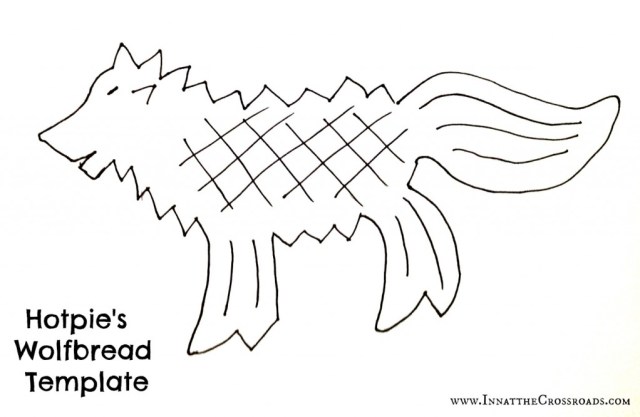
Naturally, I had to update things. I got in touch with Karyn Booth, the food stylist for the show, for some tips. She told me that this version is more scone-like than bready, to help keep the dough from rising too much and spoiling the shape. Her ingredients included Irish brown soda flour, whole meal, baking powder, honey, and buttermilk. She also recommended a very sharp knife. Deliciously simple!

This version turns out basic and hearty, full of earthy, wheaty goodness. A little boring on its own, the rustic scone texture is perfect for a schmear of salted butter, or a nice dollop of honey.

I hope you enjoy this updated version!


 Hotpie’s Wolfbread, version 2

This recipe makes about 3 wolves. Form any leftover scraps into a biscuit shape and bake alongside the wolves- it will give you something to nibble while you admire your handiwork!

Ingredients:

  • 2 cup coarse meal
  • 3 cups wheat flour
  • 1 tsp. baking soda
  • 1 tsp. baking powder
  • pinch salt
  • 6 Tbs. butter
  • 4 Tbs. honey
  • buttermilk or sour milk
  • 1 egg, beaten with a little water, for the wash

Combine the dry ingredients, then rub in the butter. Stir in the honey, followed by the buttermilk, just enough at a time, until you have a nice soft workable dough. Roll out to around 1/2″ thickness, and carefully cut into the direwolf shape with a sharp knife. When you’re satisfied, transfer to a baking sheet lined with parchment paper. Brush all over with the beaten egg.

Bake at 350F for around 20 minutes, or until a lovely golden brown.

wolfbread template

Ramp Butter

ramp butter

Thoughts:

This was my first year foraging for ramps, and I have to admit that I’m hooked. The sheer number of tasty amazing things that can be done with them boggles the mind. My favorites so far, apart from this, are ramp grilled cheese and a ramp pesto with pasta and fiddleheads.

But I’m getting ahead of myself.

Ramps are little wild leeks that grow in damp shady places in the spring, and have a smell and flavor somewhere between leeks and garlic. While they can be found on your own, folks often are somewhat loathe to share their foraging spots. Fortunately for me, a couple of neighbors were good enough to point me in the right direction. We trudged out into the woods with tall boots, buckets, and shovels. I gathered up a bunch of the little things, and headed for home.

This butter is wonderful. It helps preserve that wonderful pungent essence of springtime throughout the year, provided you freeze it well. The better the butter you start with, the more amazing this becomes. Enjoy it on anything savory for which you would normally employ butter. Personally, I think it’s incredible on warm biscuits, fresh from the oven.

Those skinny little ramps in the photo were all I had left for staging. Too small for eating, I’ve planted them in shady parts of the yard. With any luck, I’ll have my own ramp patch in a few years…

compound ramp butter, using wild-foraged ramps

Ramp Compound Butter Recipe

Ingredients:

  • 1 handful ramps
  • 2 sticks butter, softened
  • pinch of sea salt, if using unsalted butter

Clean your ramps, if wild foraged, by washing the dirt from them and peeling away any slimy outer skins, leaving the white shoots. Cut off the very bottom of the ramp, where the little roots stick out. Place your ramps in a small bowl and pour boiling water over them- this helps keep that nice green color. Let sit for about 20 seconds, then remove and pat dry.

Slice the ramps: I usually cut the green parts in slightly larger strips to give the butter some visual interest, but mince the white parts. You can eyeball the proportions. Add the prepared ramps in with the butter and salt, and mix until combined.

Divide the butter into several parts, roll in parchment paper, and place in a freezer bag. Slice off a small part at a time, and enjoy!

« Previous Page
Next Page »

Made something?`

If you’ve made a recipe from the blog, be sure to tag your tasty creations with #GameofFood!

Support the Blog!

If you love the content here, please consider becoming part of our Patreon community!

Support the blog by becoming a patron!

Affiliate Disclaimer

Please bear in mind that some of the links on this website are affiliate links, meaning that if you go through them to make a purchase I may earn a small commission. I only include links to my own books, and products I know and use.

CyberChimps WordPress Themes

All content copyright 2024